


A flammable cabinet, sometimes known as a flammable storage cabinet, is designed to safely store potentially flammable or combustible liquids, gases or solids.
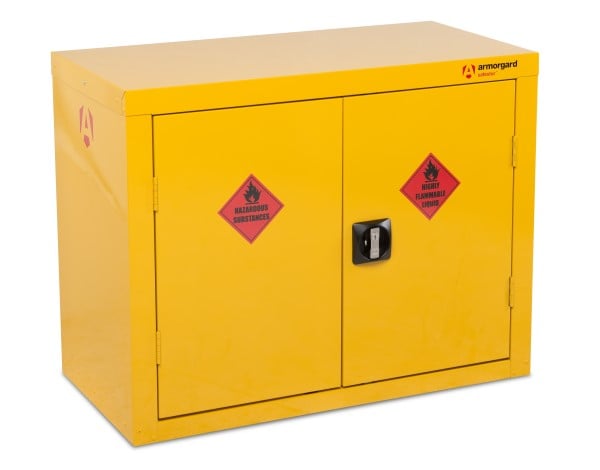
Many workplaces, including factories, laboratories, farms and cleaning companies will regularly work with flammable materials. These materials are essential to work processes, but a risk to people, property and the environment. Employers will need a way to store them safely.
Instead of storing these hazardous materials on an exposed shelf, a flammable cabinet allows you to store flammable or combustible liquids, gases or solids in a container that is specifically designed to prevent fires and smother flames.
Flammable cabinets are made from flame/ fireproof materials, which significantly reduces any risks to people, property and the environment from the liquids stored inside the cabinets.
Flammable cabinets:
- Safely store flammable liquids, solids and gases
- Protect the contents of the cabinet against damage
- Segregate flammable liquids and other chemicals, which are incompatible and could otherwise mix to cause violent chemical reactions
- Safely contain flammable liquid spills
- Allow time for people to escape, call the emergency services and/ or use firefighting equipment, in the event of a fire
If your workplace handles flammable or combustible materials, you should have a flammable storage cabinet to:
- Safely store flammable or combustible solids, liquids or gases
- Contain any spillages or leaks
- Protect employees, customers and visitors
- Prevent unauthorised people from coming into contact with hazardous substances
Typical features of a flammable cabinet:
- Clear labelling warning of the flammable/ combustible contents
- Made from metal which provides 30 minutes of fire resistance
- Lipped shelving to catch any spills
- Must retain spill of 110% of the largest vessel stored within it or 25% of the total amount stored - whichever is greater
In addition, flammable cabinets should be placed in a safe designated area in the workplace, which:
- Is away from processing areas
- Doesn’t obstruct emergency exits
- Has plenty of space
- Is in a well ventilated area
- Is not too close to doors
- Is far from other dangerous substances
- Is away from heat and ignition sources
The location of any flammable storage cabinets should be clearly marked on room hazard plans and be part of a building’s fire risk assessment.
What should be stored in a flammable cabinet?
Flammable and combustible liquids ignite automatically when they reach a certain temperature. Flammable liquids have a flashpoint (the lowest temperature at which it gives off enough vapour to start burning) of below 37.8 degrees Celsius, while combustible liquids have a flashpoint of between 37.8 and 93.3 degrees Celsius.
Some common examples of flammable liquids include petrol, paint and paint thinners.
Flammable gases will burn when mixed with oxidant, such as air, and when they come into contact with an ignition source. These can be dangerous even when stored in sealed containers, as small quantities of escaping gas can form an ignition mix, which can lead to fire or explosions.
Examples of flammable gases include carbon monoxide, methane, propane and hydrogen sulphide.
Oxidising chemicals can spontaneously evolve oxygen at room temperature. This can accelerate a fire, so they should be stored in a flammable cabinet. As some oxidisers can mix with other chemicals to combust, they must be stored separately from other chemicals.
Examples of oxidising chemicals include hydrogen peroxide and bleach.
Explosive chemicals can be activated by heat, friction or shock to cause an explosion. Touch sensitive chemicals are particularly dangerous, as they can be activated just by brushing against the container. The risks can increase as the chemicals get older and start to degrade over time, so particular care should be taken over storing older stock.
Explosive chemicals include acetylides, oxonides and haloamines.
Flammable cabinets are designed to store flammable or combustible materials only. Other hazardous materials, such as acids or corrosive liquids, should be stored in acid and corrosive storage cabinets or other types of storage units, not flammable cabinets.
It is recommended by the Health and Safety Executive (HSE) that the maximum quantity stored in a flammable cabinet is 50 litres for extremely flammable, highly flammable or flammable liquids, with a flashpoint below the maximum ambient temperature of the working area. For other flammable liquids with a flashpoint of up to 55 Celsius, cabinets should contain no more than 250 litres.
In Britain, the main law surrounding the use and control of flammable and explosive substances in the workplace is the Dangerous Substances and Explosive Atmospheres Regulations (DSEAR) 2002. This sets out minimum guidelines for storing flammable substances.
DSEAR applies where there is work carried out and a dangerous substance is in the workplace, which could be a risk to the safety of people, as a result of fire or explosion.
DSEAR covers the storage and use of flammable gases in a wide range of industries. To ensure a workplace complies with DSEAR, employers should carry out a risk assessment. The purpose of the risk assessment is to eliminate or reduce the risk from dangerous substances.
Flammable storage cabinets are a very effective way of reducing or controlling risks, because they help to avoid the release of dangerous substances. They also collect, contain and remove any accidental releases within the cabinet.
If your workplace uses flammable or combustible materials, you need to have flammable cabinets. Tanks for Everything has a range of flammable storage cabinets to help businesses minimise the risk in the workplace.


